Why America’s space workforce is the real battleground, and how Skyta answers the call
By: Marica Burlacu
Head of Digital Growth and Community Expansion, Skyta LLC
America does not lose leadership quietly, it loses it when vision is not matched with execution.
On December 18, 2025, the White House issued an Executive Order titled “Ensuring American Space Superiority,” with accompanying materials describing priorities that include a Moon return targeted for 2028 via Artemis, lunar outpost elements by 2030, an “at least $50 billion” additional commercial investment goal by 2028, advanced missile defense prototypes, and space nuclear power concepts, including reactors on the Moon and in orbit.
Primary sources:
• Executive Order: http://whitehouse.gov/presidential-actions/.../ensuring-american-space-superiority
• Fact Sheet: http://whitehouse.gov/fact-sheets/.../new-age-of-american-space-achievement
1. Language as strategic infrastructure
Regardless of political perspective, one pattern is consistent, language moves markets. When national leaders frame space as an economic and strategic frontier, industries respond. Capital shifts. New suppliers enter the market. Demand for skilled labor rises.
That is why messaging matters. It signals urgency to investors and innovators, and it signals opportunity to students, families, and career changers. An executive order is not only policy, it is a public marker that the nation intends to build at scale.
What this means in practice:
More investment into launch, satellites, space data, manufacturing, and defense-adjacent capabilities
More job openings across technical and non-technical roles
More pressure on education and training systems to produce work-ready talent faster
More need for accessible pathways that do not require elite networks to enter the field.
2. Preparedness, not isolation
Global space competition is now strategic, commercial, and accelerating. International collaboration will continue, but leadership requires preparedness. Preparedness means depth, bench strength, and the ability to mobilize talent across the country.
Instead of asking only whether the United States should collaborate, a more operational question is, is the United States developing enough engineers, analysts, data scientists, satellite specialists, and systems thinkers to lead those collaborations and to sustain domestic capability?
Selected publicly stated goals and partnerships, timelines may evolve:
| Nation or Region | Nation or Region |
|---|---|
| China | Aims to land astronauts on the Moon by 2030, Tiangong space station operational, long-term Mars exploration goals |
| Europe, ESA | Lunar Gateway partner, Ariane 6 launch capability, leadership in space sustainability initiatives |
| India, ISRO | Chandrayaan-3 lunar landing success, growing commercial space sector, planned planetary missions |
| United States | Artemis Moon return targeted for 2028, lunar outpost elements by 2030, commercial investment goal of at least $50B by 2028 |
3. The commercial government pivot
One of the most consequential shifts of the last decade is the move from government-only execution to public private partnership models. This has increased speed and widened the supplier base. NASA and other agencies increasingly serve as strategic orchestrators, standard setters, and anchor customers.
A simple framework explains the modern ecosystem:
Government: Sets vision, funds priorities, defines safety and security requirements, and purchases capability
Industry: Builds products and services, innovates, manufactures, launches, operates, and scales
Education: Builds continuity, the human capital pipeline that sustains the ecosystem over time
The third pillar, continuity, is where gaps appear. The space economy is expanding faster than traditional pipelines can refill. That is where modern, scalable training and credentialing must step in.
4. The workforce challenge hiding in plain sight
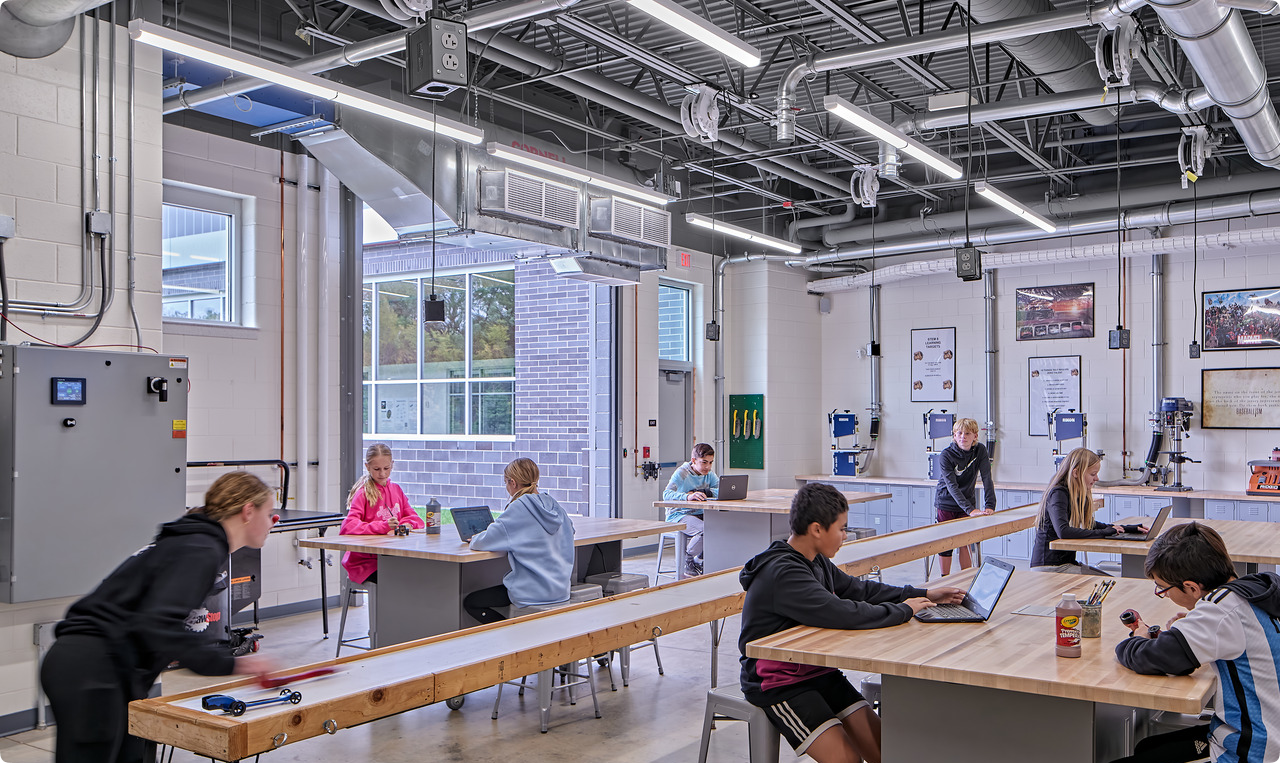
We celebrate launches and livestream landings, but the bottleneck is quieter. Employers and partners ask questions that rarely make headlines, where is the next generation of space ready talent coming from, how do we retrain professionals quickly, and how do we widen access beyond a small set of institutions.
Space careers are broader than many people realize. The field increasingly needs professionals in data, AI, cybersecurity, operations, program management, supply chain, healthcare and human factors, education, and policy. In other words, space is becoming a cross industry workforce domain.
What makes Skyta practical and scalable:
Projected global space economy of approximately $1.8 trillion by 2035, per McKinsey and World Economic Forum analyses
A U.S. goal of at least $50 billion in additional commercial investment by 2028, stated in White House materials
5. Skyta, a workforce learning platform for the space economy
Skyta was built for this moment. Skyta is a workforce learning platform designed to accelerate space literacy and space adjacent career readiness through structured courses, guided practice, and optional certificates. Learners progress from curiosity to competency with measurable milestones.
Skyta is built for individuals and institutions. Individuals can subscribe and learn immediately. Educators and organizations can use Skyta to support STEM engagement, career exploration, and workforce alignment.
What makes Skyta practical and scalable:
- Clear pathways, beginner to advanced, across space literacy, STEM foundations, and future skills
- AI assisted learning companions, Felix and Jenny, that guide learners step by step
- Gamified progress, missions, XP, and mastery based reinforcement
- Career exploration that connects learning to real role requirements and pathways
- Optional certificates to document course completion and skill development.
6. The core truth, space leadership is a human challenge
National leadership in space will not be determined by hardware alone. It will be shaped by who is trained, who is included, and who is prepared. Nations that scale human capital, mindset, and skills, alongside technology, will lead. Skyta’s mission is to widen access to the space economy by making space literacy and job relevant learning pathways available to more people, across more communities, at a cost that is accessible.